
Ahead of our April concert celebrating Shakespeare, FCC singers share the performances, films and moments that first brought the Bard’s words to life for them.
23 April (St George’s Day) is widely known as Shakespeare’s birthday, but perhaps it’s less well known that he also died on the same date in 1616, at the age of 52. More than 400 years since his death, it’s striking how much Shakespeare remains part of our lives. When we asked our members to share their memories of Shakespeare and his plays, the responses showed just how wide that influence still is.
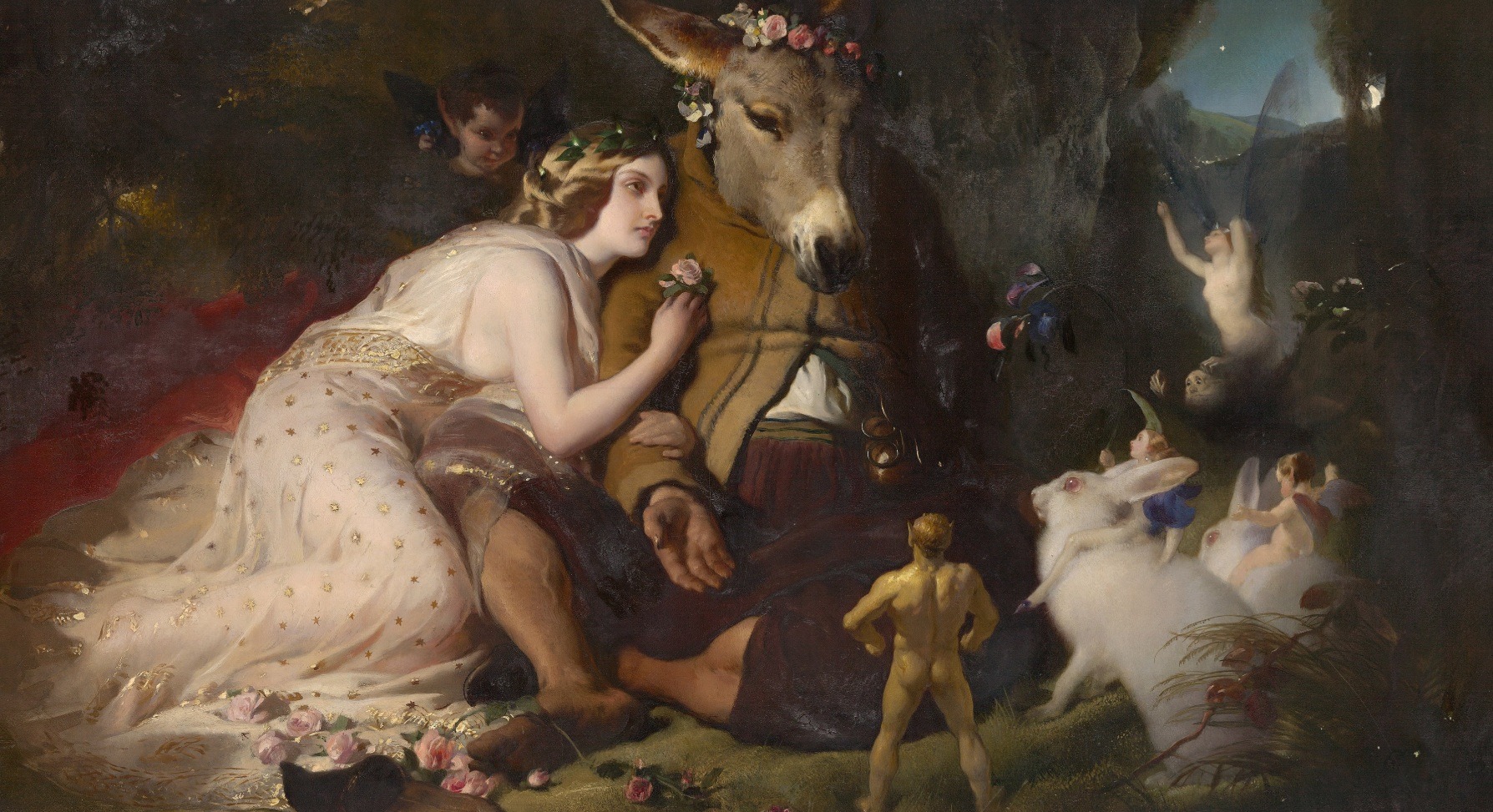
Many of us encounter Shakespeare as young children. “I first encountered Shakespeare when I read Noel Streatfield’s “Ballet Shoes” as a little girl – the three sisters at the heart of the story get involved in a production of A Midsummer Night’s Dream. I remember being very wrapped up in the glamour of the costumes and the way they practiced their lines,” remembers one of our singers. Another FCC soprano first encountered Shakespeare through the same play – “Playing ‘fourth fairy’ in a high school production gave me a taste for the lights, costumes and greasepaint, although much of the language evaded me,” she admits.
Then, for many people, the next encounter comes at school. One of our basses recalls studying Macbeth for GCSE Drama: “The supernatural aspect of the witches gave us scope to develop this within our groups. ‘Fair is foul, and foul is fair’ sums up the play, that nothing is what it seems and all is deceptive. What seem now cliché type phrases, “fire burn and cauldron bubble” have become mainstream witchcraft symbolism, which is interesting because perhaps they were the same then. We went to see a production done locally and covered scenes across the class.”
The way Shakespeare’s plays provide an insight into the human character and emotions can have a particularly powerful impact on us during our adolescence. “I was first swept away by the raw intensity with which Shakespeare depicts human experience when as a teenager, I saw Zeffirelli’s film, Romeo and Juliet. That achingly beautiful music playing as a refrain to the unbearable grief of the young lovers has stayed with me,” writes Jane. Film and television have certainly helped bring Shakespeare to wider audiences. One FCC member, for example, remembers watching the BBC television adaptations at school. When we encounter these stories in our youth – just as we are learning to navigate the complexities of human emotion – the language and feelings in the plays can stay with us for life.
Perhaps that’s why we so often find Shakespeare reimagined into new formats. One of our members highlighted the experience of singing opera based on Shakespeare plays (Verdi’s Otello is perhaps the best known) and another mentioned going to see a production of Kenneth MacMillan’s ballet Romeo and Juliet, with its unforgettable score by Prokofiev. Our members love musicals which take their inspiration from Shakespeare’s dramas but apply a new slant – special mention to West Side Story here, with its fantastic songs by Leonard Bernstein and Stephen Sondheim. And The Lion King, with its story inspired by Hamlet, remains a fixture in London’s West End…
One recent example of Shakespeare’s continuing influence is the film Hamnet. This devastating yet stunning cinematic exploration of grief and artistic creation is based on Maggie O’Farrell’s novel of the same name, and Irish actor Jessie Buckley has just won the 2026 Best Actress Oscar for her role as Agnes in the film. Several FCC singers went to see it and it has left them with lasting memories. “To me, it is one of the most moving films about perspective and understanding. Death, acceptance and growth,” writes Russell, praising the final scene where a performance of the last act of Hamlet at the Globe Theatre provides a poignant, cathartic reconciliation through art.
One of our singers sums it up wonderfully: “The beauty of Shakespeare is that it is so open to multiple interpretations; our concert will be a really special way to bring together different plays, a range of composers, and hopefully a sprinkling of magic fairy dust!”
We hope you’ll join us on Saturday 25 April at 7:30pm at Trinity Church, Nether Street N12 7NN, to hear Shakespeare’s words brought to life through music. Tickets are available online or at 0333 666 3366 – and they’re cheaper if booked in advance.